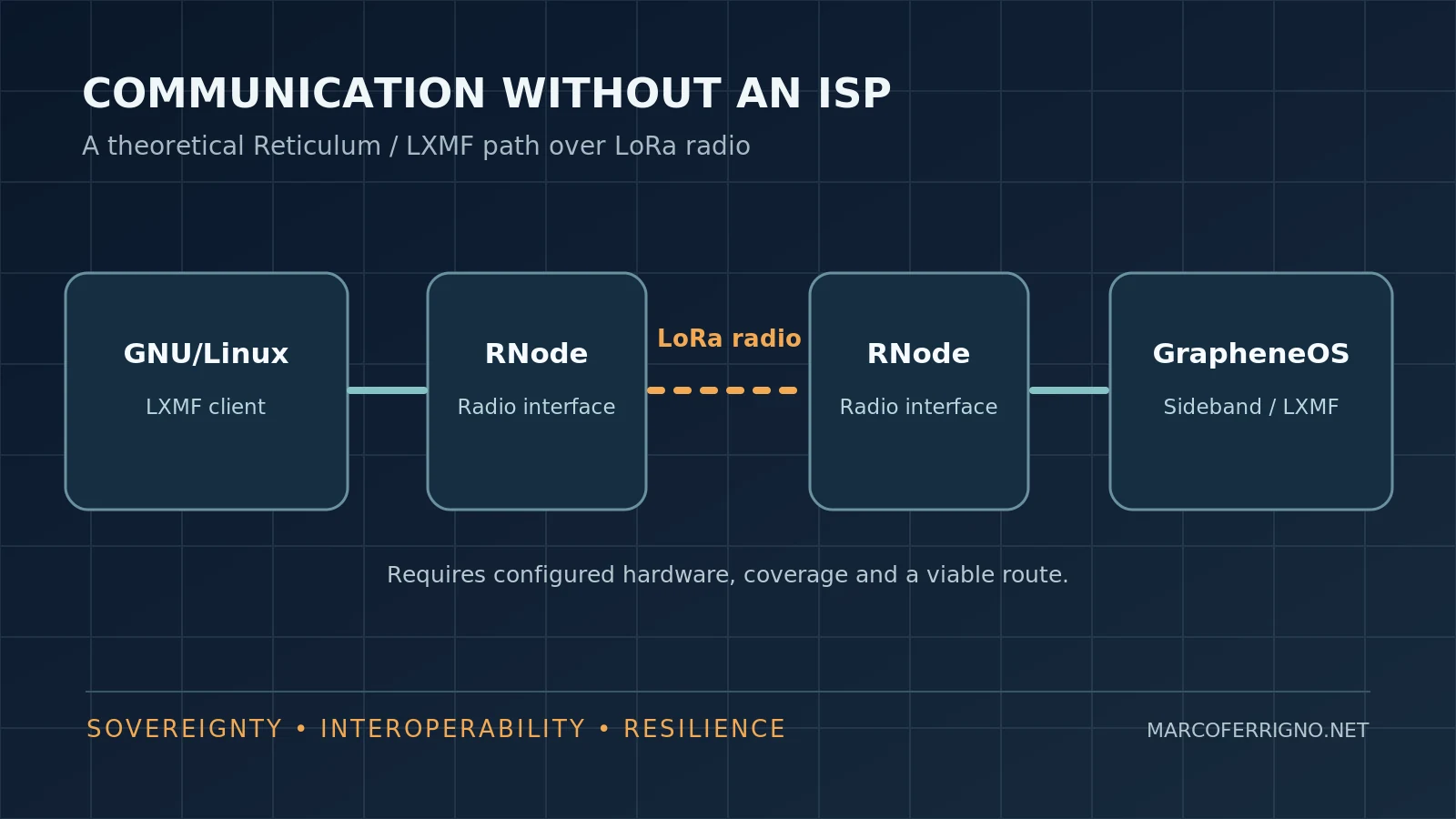
La sovranità digitale non richiede di sostituire tutta Internet. Dalla portabilità dei servizi alle reti Reticulum su LoRa, fino ai pagamenti non-custodial: strumenti, compromessi e responsabilità di chi vuole ridurre le dipendenze.
La sovranità digitale non richiede di sostituire tutta Internet. Dalla portabilità dei servizi alle reti Reticulum su LoRa, fino ai pagamenti non-custodial: strumenti, compromessi e responsabilità di chi vuole ridurre le dipendenze.
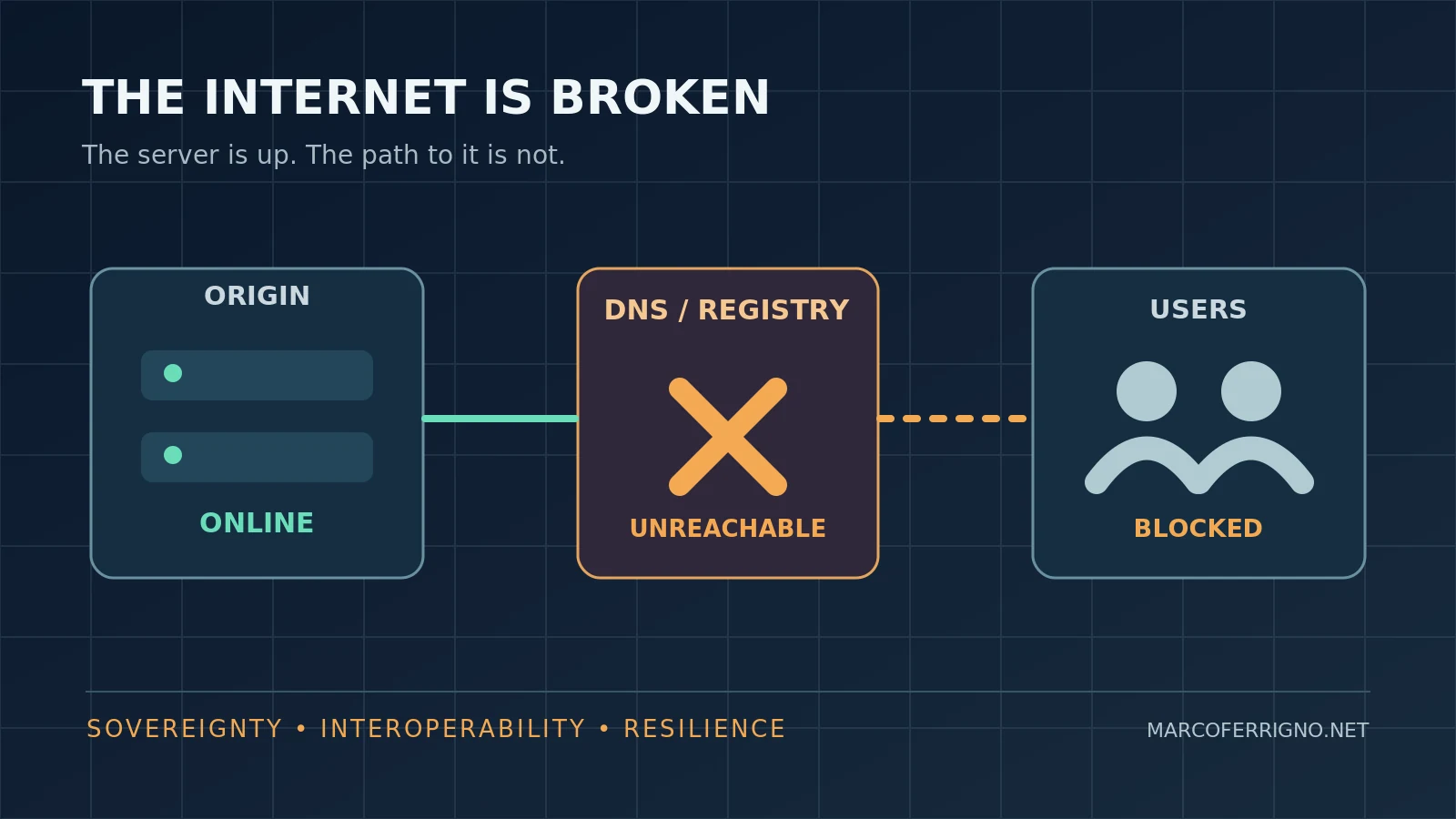
I server funzionano, ma un servizio può diventare irraggiungibile. Dal caso Autistici/Inventati ai punti di controllo di Internet: DNS, identità, cloud, distribuzione e pagamenti. L'alta disponibilità non coincide con la sovranità digitale.
Every phase of the technology industry produces its own premature obituaries.
The web was supposed to kill newspapers. The cloud was supposed to kill system administrators. Low-code was supposed to kill developers. Today, in the middle of the generative AI wave, it is Open Source’s turn.
The thesis returned to the center of the debate after the Tailwind Labs case: AI would be feeding on the work of open communities, disintermediating the projects that helped nourish it, and making free software economically unsustainable.
A recent article by Maurizio Farina, Open Source in the Age of AI: the Tailwind CSS Case, has the merit of framing the issue clearly. The concern is legitimate. The case is real. The question of the economic sustainability of open projects cannot be dismissed with a shrug.
But the conclusion, in my view, is too broad.
AI is not killing Open Source. It is putting pressure on certain business models built around Open Source and, at the same time, making urgent a problem that already existed: how to redistribute value toward those who maintain the software infrastructure we all depend on.
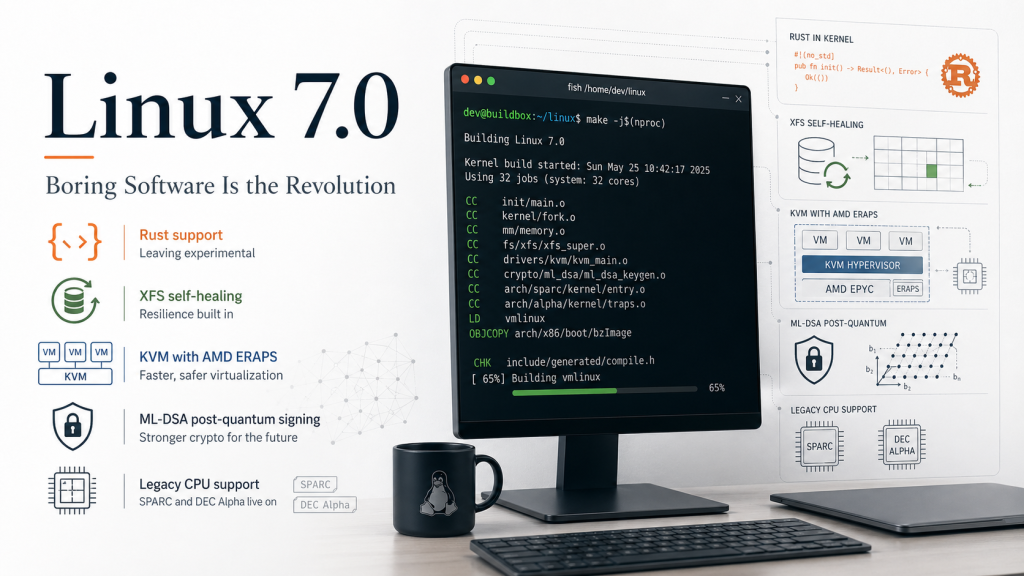
While the industry chases the next AI benchmark and the next model announcement, something genuinely important happened on April 12, 2026, and it arrived with almost no fanfare: Linus Torvalds released Linux kernel 7.0. The announcement was accompanied by a typically deadpan Torvalds joke — he bumped the major version, he said, because 6.19 was getting difficult to count on his fingers and toes. No architectural break. No marketing slide. A merge window, seven release candidates, a tarball on kernel.org, a signature to verify.
This is what real infrastructure looks like when it works. It’s patient. It’s incremental. It doesn’t ask you to be excited. And if you’ve been paying attention to the right signals, Linux 7.0 is one of the most consequential kernel releases in years — not because any single feature is revolutionary, but because five long-running engineering efforts reach maturity in the same cycle. Rust graduates from experimental. XFS becomes self-healing. KVM virtualizes AMD’s ERAPS. Module signing gets post-quantum cryptography. And, as a quiet reminder of what “long-term support” really means, the kernel continues to ship patches for SPARC and DEC Alpha.
This post tells each of those stories. Not as a feature list, but as evidence of what it takes to build infrastructure you can actually trust over decades.
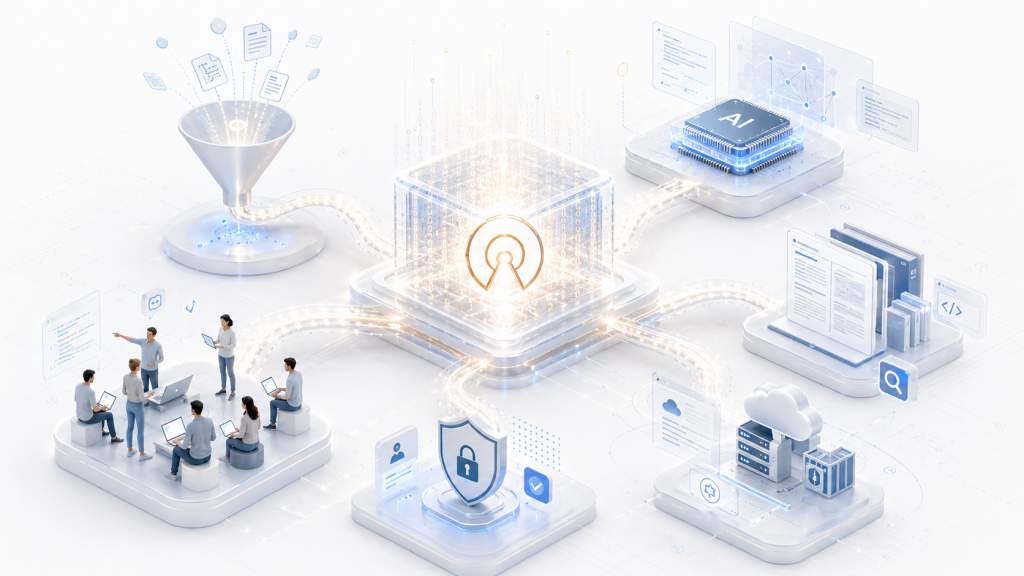
Ci troviamo a un bivio tecnologico senza precedenti. Quello che un tempo era un dibattito di nicchia per accademici si è trasformato, tra il 2025 e il 2026, in una brutale urgenza politica e strategica: Sovranità digitale. Dal radicale passaggio della Danimarca a Linux e LibreOffice ai massicci investimenti del Sovereign Technology FundL'Europa si sta finalmente ribellando per riappropriarsi delle chiavi delle sue infrastrutture critiche.
In questo articolo, esploriamo come l'open source stia diventando il fondamento della nostra indipendenza, il ruolo cruciale dell'IA "trasparente" e il rischio di rimanere indietro nella corsa globale alle competenze digitali. La vera autonomia non riguarda solo il software che utilizziamo; riguarda la responsabilità che ci assumiamo di essere padroni del nostro futuro digitale.
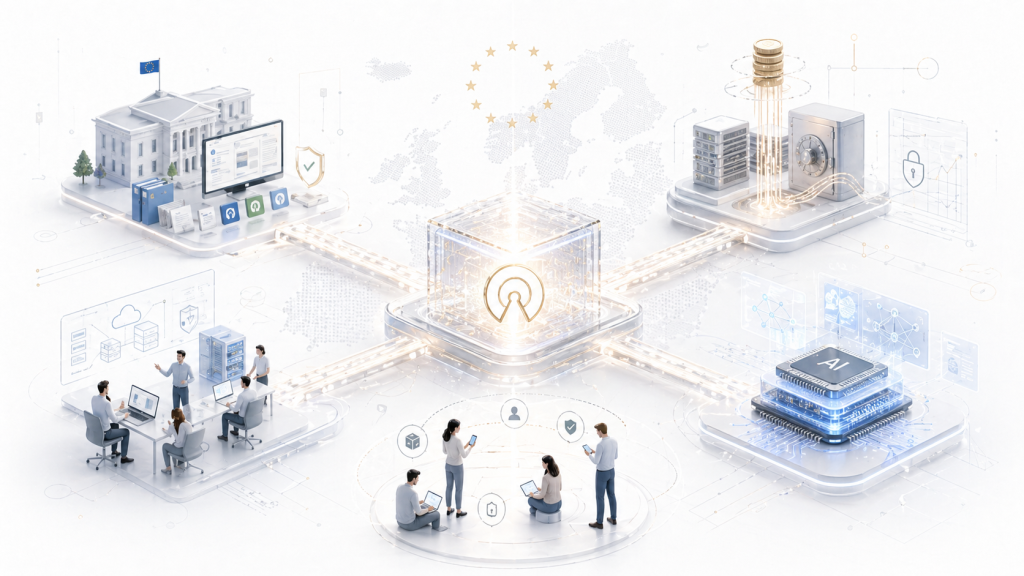
L'integrazione del open source nel panorama economico globale rappresenta una trasformazione significativa nei modi in cui le economie possono crescere e interagire. Questo articolo esplora come la filosofia e la tecnologia open source possono contribuire allo sviluppo economico, attraverso l'analisi di teorie delle scuole austriaca e keynesianaInoltre, discuteremo Bitcoinruolo nel mitigare alcuni dei problemi più comuni dell'economia moderna.
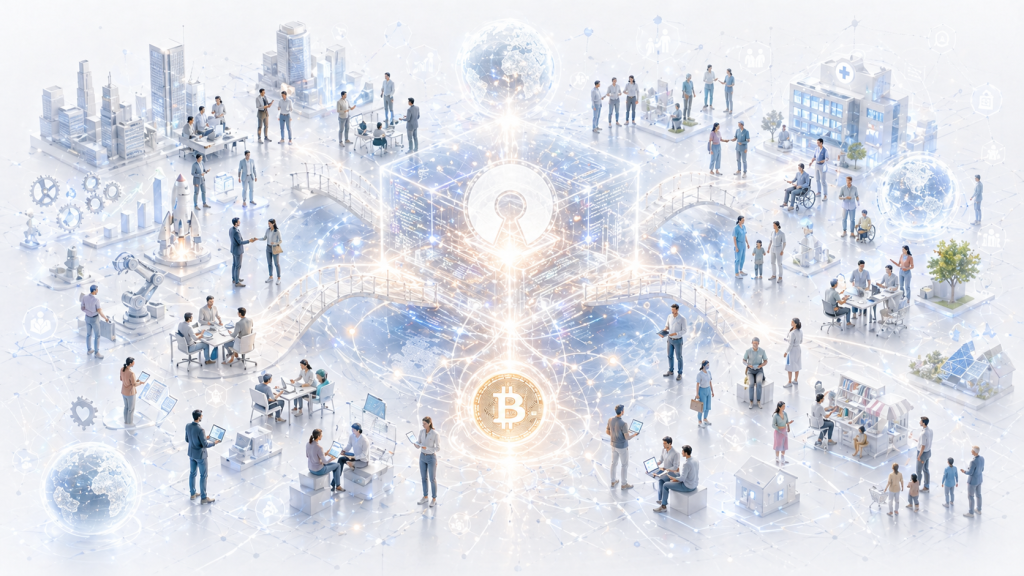
Nel vasto mondo della tecnologia, in continua e rapida evoluzione, l'open source si configura come una bussola che orienta verso l'innovazione, la trasparenza e la collaborazione. Caratterizzato dalla sua natura liberamente accessibile, l'open source non è soltanto una tipologia di software o una metodologia di sviluppo: è una filosofia. Una filosofia che promuove la libertà di esaminare, modificare e distribuire il codice sorgente, consentendo a chiunque sia interessato di migliorarlo o di adattarlo alle proprie esigenze. Questo articolo esplora le ragioni per cui adottare tecnologie open source e contribuire a esse non solo arricchisca la comunità tecnologica globale, ma rappresenti anche un passo avanti fondamentale per un'innovazione sostenibile e per la crescita personale.