While the industry chases the next AI benchmark and the next model announcement, something genuinely important happened on April 12, 2026, and it arrived with almost no fanfare: Linus Torvalds released Linux kernel 7.0. The announcement was accompanied by a typically deadpan Torvalds joke — he bumped the major version, he said, because 6.19 was getting difficult to count on his fingers and toes. No architectural break. No marketing slide. A merge window, seven release candidates, a tarball on kernel.org, a signature to verify.
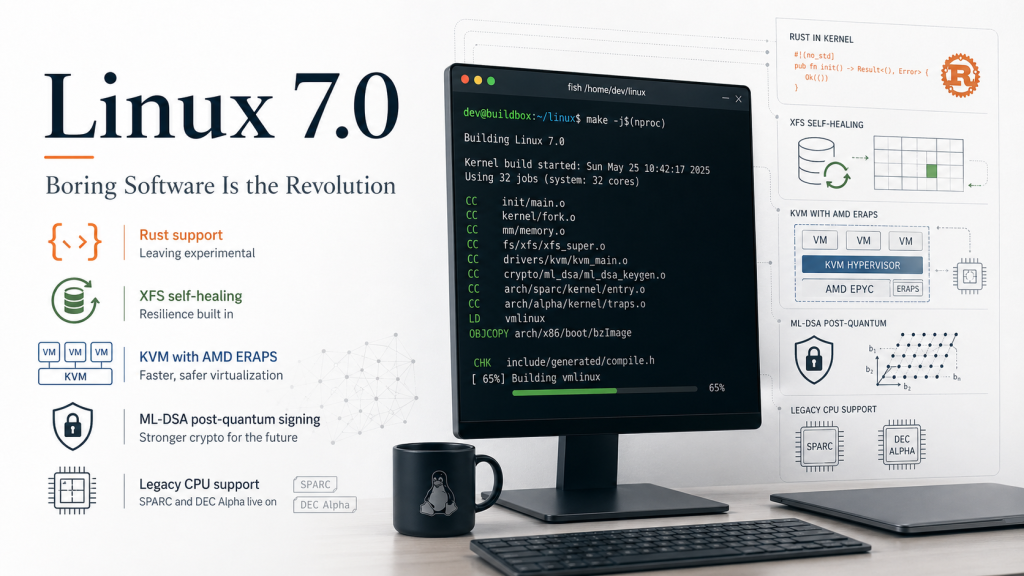
This is what real infrastructure looks like when it works. It’s patient. It’s incremental. It doesn’t ask you to be excited. And if you’ve been paying attention to the right signals, Linux 7.0 is one of the most consequential kernel releases in years — not because any single feature is revolutionary, but because five long-running engineering efforts reach maturity in the same cycle. Rust graduates from experimental. XFS becomes self-healing. KVM virtualizes AMD’s ERAPS. Module signing gets post-quantum cryptography. And, as a quiet reminder of what “long-term support” really means, the kernel continues to ship patches for SPARC and DEC Alpha.
This post tells each of those stories. Not as a feature list, but as evidence of what it takes to build infrastructure you can actually trust over decades.
 English